From the reserves of Kashmir
Pampore · Dachigam · Pahalgam · Pir Panjal
From the Reserves of Kashmir
Saffron · Honey · Dandelion Roots · Wild Mushrooms
Sourced by hand. Kept by tradition.
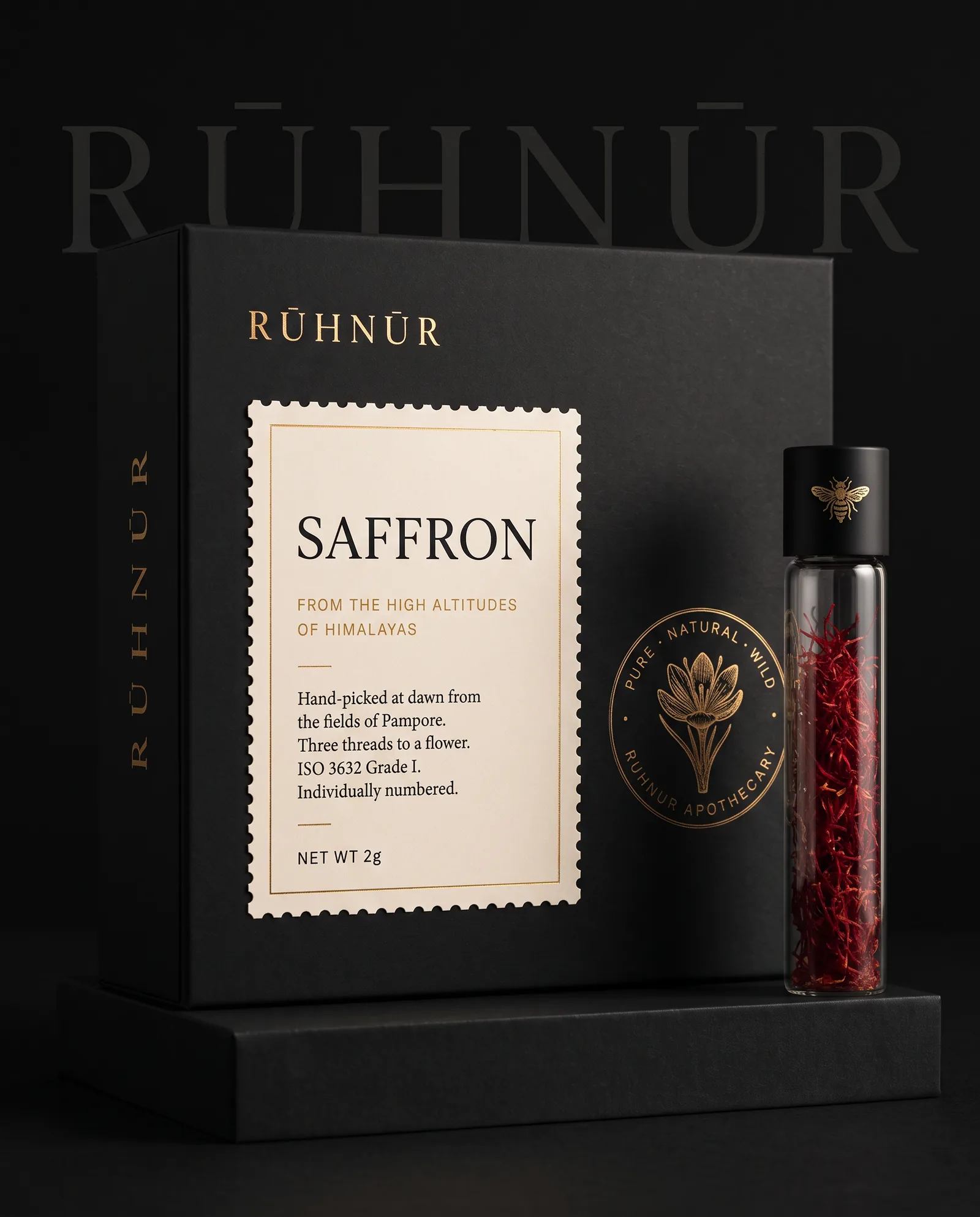
In the Pampore belt of Kashmir, at 1,600 metres, the Crocus sativus blooms for a single week in October. Each flower yields three stigmas. What most suppliers do not declare: they retain the yellow style · the stalk · attached to the stigma for weight. Rūhnūr keeps only the red tip. The difference is measurable: our crocin concentration tests above 250 absorbance units under ISO 3632 Grade I, the international ceiling for authentic saffron. Dried over low charcoal heat at no higher than 35°C · not hot-air processed, because heat above 40°C degrades crocin. Four centuries of practice. No intermediaries. Every batch traceable to a single field in Pampore.
"The yellow base is weighed but not kept.
Only the red tip counts."
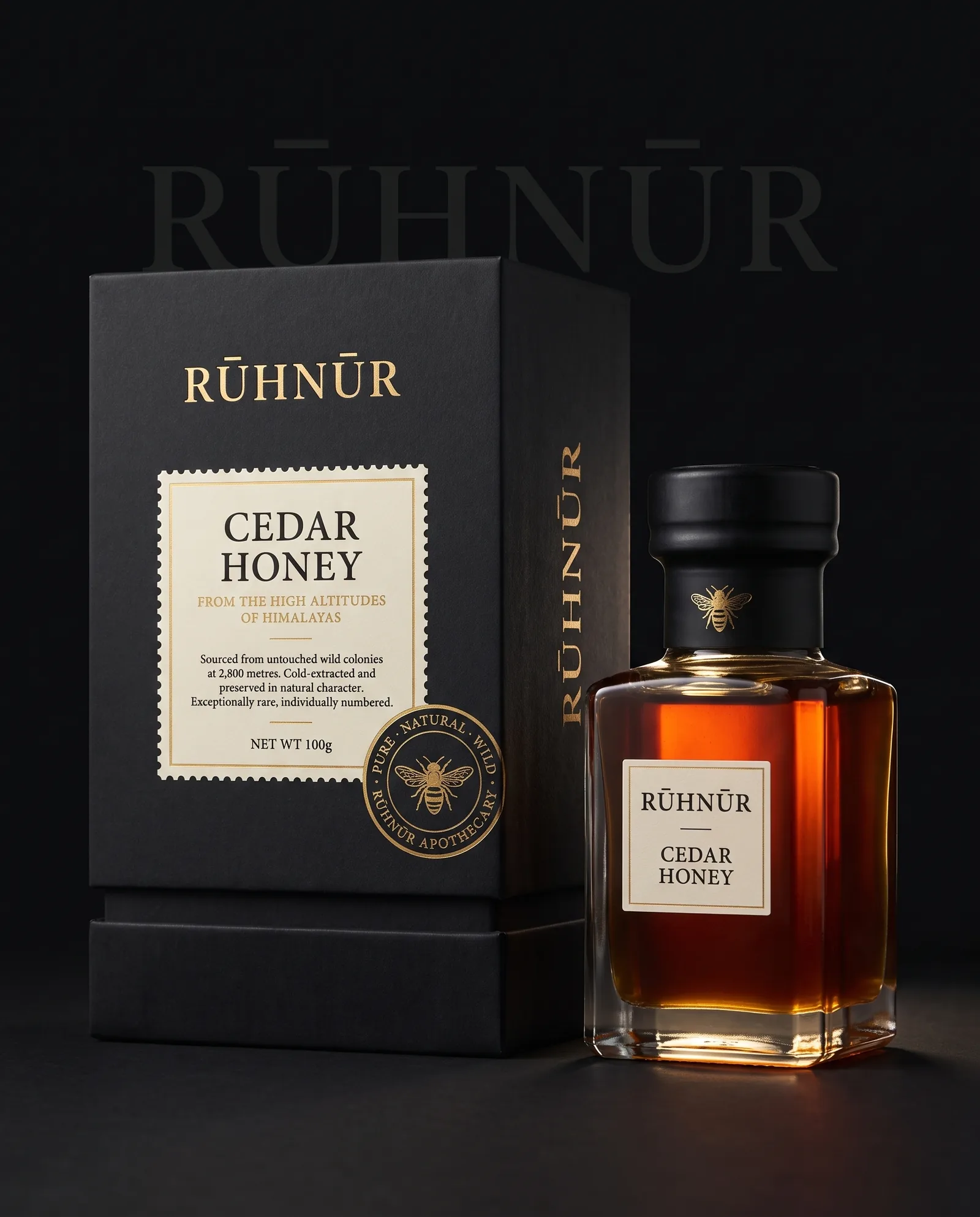
Above the deodar cedar forests of Dachigam · at 2,800 metres, where no road reaches · wild bee colonies live in cliff faces and hollow trunks. They have never been relocated, supplemented with sugar, or treated with antibiotics. Managed hive operations move colonies at least twice a season, disrupting enzyme production each time. These colonies stay. Their diastase activity and intact glucose oxidase indicate zero intervention in the fermentation chain. The HMF content · the standard marker of heat processing or adulteration · sits near zero. Some years the yield is a few kilograms. Some years, nothing at all.
Rūhnūr's Cedar Honey is cold-extracted once a year by the same family that has worked this forest for three generations. Allocated in numbered jars to a closed list. No open sale. The reserve is held year-round · restocked each summer when the hive permits.
"The cedar does not bloom on command.
Neither does the honey."
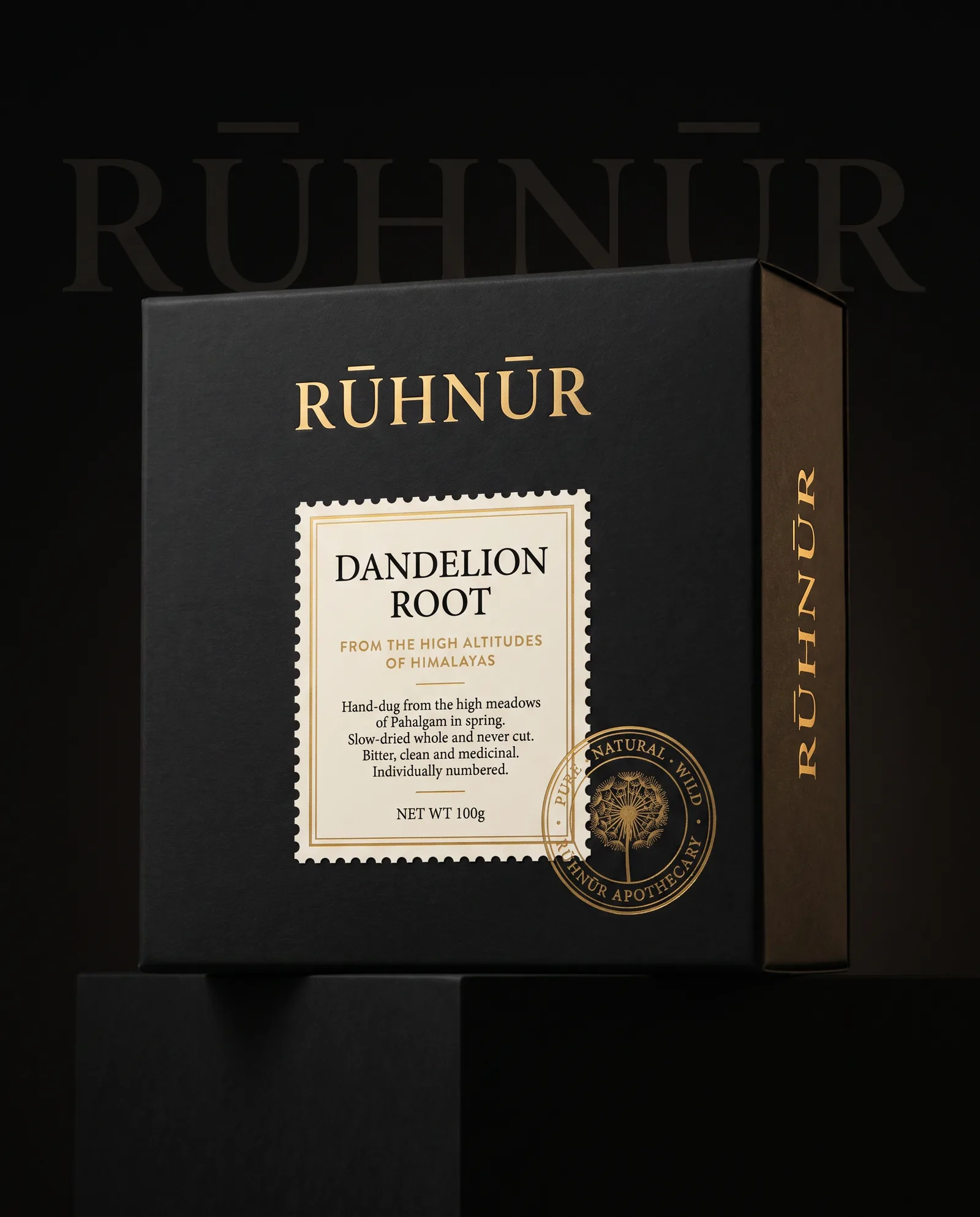
In the high meadows above Pahalgam · above 1,800 metres, in the three weeks between snowmelt and the dandelion's own flowering · the roots hold their peak concentration of inulin and taraxacin. Once the plant flowers, it redirects that energy upward to the seed and the medicinal profile diminishes sharply. This is the specific window. There is no cultivated patch, no scheduled return.
Wild dandelion roots develop over multiple growing seasons in alkaline alpine soil, producing a root density and alkaloid profile that one-year cultivated roots cannot replicate. Rūhnūr harvests whole, dries in open air at ambient temperature, and keeps without processing. The batch drawn from one spring does not return until the following year · and only if the meadow permits it.
"Once the flower opens,
the root is already past its moment."
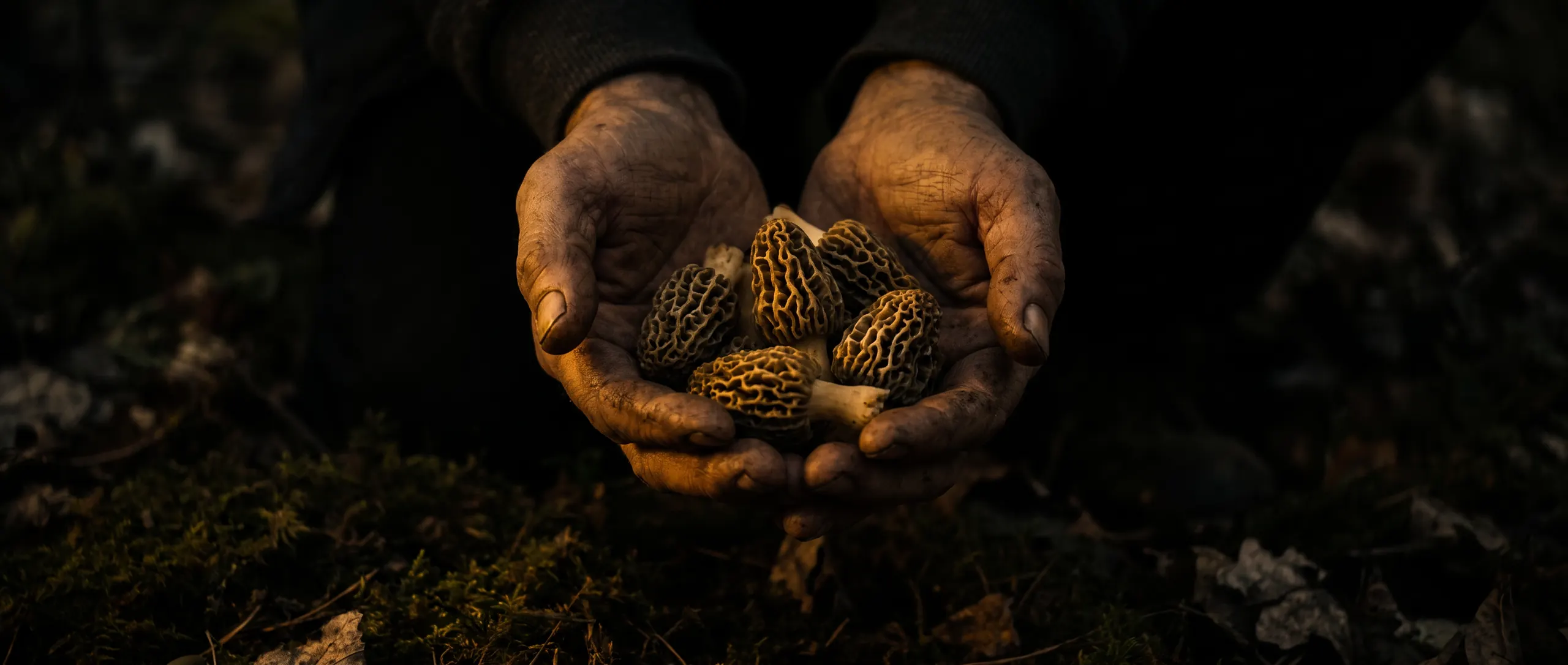
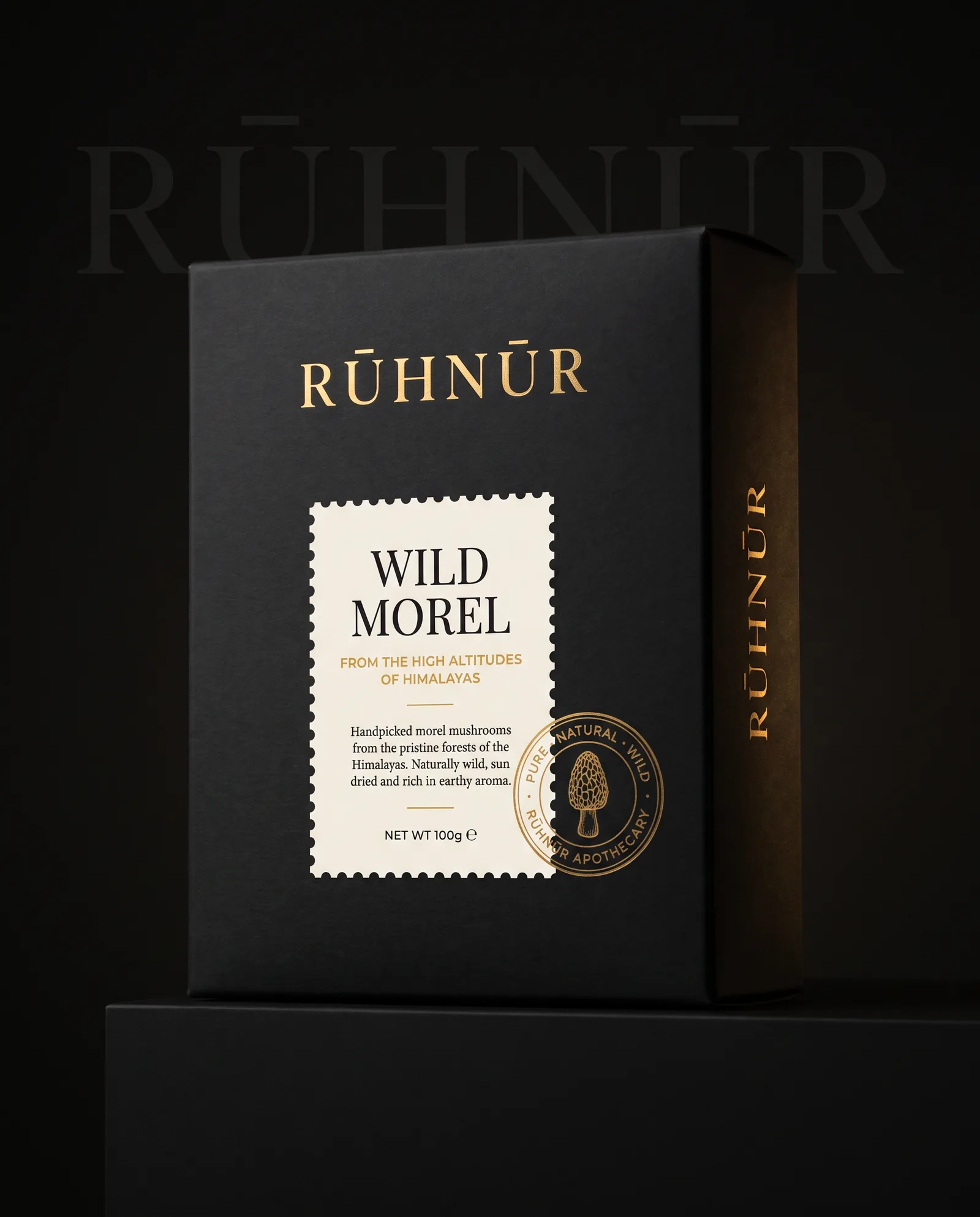
The north-facing slopes of the Pir Panjal receive fewer than four hours of direct sunlight at the spring solstice. In that constrained light and cold meltwater soil, the morel mycelium develops over years rather than weeks. The resulting fruiting body is structurally denser, with a flavour concentration that rapidly-grown valley morels cannot match. Wild morels form obligate symbiotic bonds with specific host tree roots · they cannot be commercially cultivated at this quality. They emerge when meltwater still runs cold through the root systems, and not a week before.
Rūhnūr sources a single allocated batch each spring and again in autumn from the same forest families whose knowledge of these slopes is itself the collection method. Two different mushrooms, two different characters. Each is finite. Once allocated, the list closes until the next season opens.
"The forest does not offer
what you cannot yet name."
Saffron and Honey hold the permanent reserve · always available, restocked with each new harvest. Dandelion Roots and Wild Mushrooms arrive once, when the land permits, and do not return until the following year.
Available year-round · Restocked each harvest season
Pampore · ISO 3632 Grade I · Batch 04 / 2026
Each stigma is separated from the style by hand at dawn · the yellow base discarded, the red tip kept. The resulting crocin concentration measures above 250 absorbance units under ISO 3632 Grade I · the threshold below which saffron is classified as commercial. One harvest. One field. The reserve from that week is numbered and held through the year.
Dachigam · Wild Hive · Batch 11 / 2026
From wild bee colonies at 2,800 metres that have never been relocated, supplemented, or treated. At this altitude no agriculture reaches · no pesticide contamination, no sugar feeding, no antibiotic use. Cold-extracted once a year, diastase enzyme activity is intact · the marker that distinguishes undisturbed honey from processed. Allocated in numbered jars to a closed list.
Arrive once a year · Finite quantities · No restock until the following season
High Meadows, Kashmir · Spring Forage · Batch 01 / 2026
Harvested before flowering, in the narrow window when inulin and taraxacin concentrate in the root. After the plant flowers, that energy migrates to the seed and the medicinal profile falls sharply. Wild roots foraged above 1,800 metres over multiple growing seasons are measurably denser than cultivated one-year roots. Air-dried whole. No heat. No processing. This batch will not return until 2027.
Pir Panjal Slopes · Shadow Harvest · Spring 2026 · Closed
From north-facing Pir Panjal slopes where limited sun and cold meltwater soil slow mycelium development to a fraction of farmed rates · producing a structurally denser, more aromatic mushroom. Morels form obligate symbiotic relationships with specific host trees and cannot be commercially farmed at comparable quality. Batch 01 / 2026 is fully allocated. The autumn reserve opens in October.
I
Three threads in warm water before the kettle boils. A few minutes of patience. The colour that blooms · deep amber, almost wine · is the same one described in Mughal manuscripts. Add honey. Drink slowly.
II
A pinch in the soaking water transforms basmati into architecture. A strand stirred into cream redefines dessert. Rūhnūr saffron tests above 250 on the ISO 3632 crocin scale · what you taste is not just colour. It is memory.
III
Two threads dissolved in raw honey, applied to the face as a 10-minute mask. Known since the court of Akbar. The crocins are anti-inflammatory; the honey seals. What you feel afterward has no adequate word in English.
"Yeli mye saffran chhi wuchaan,
When I look at my saffron,
mye chu maanas yore aawan."
my soul comes home.
RŪHNŪR was founded with one belief: that provenance is not a story.
It is a measurement · a field, an altitude, a crocin count, a diastase level.
Every reserve · saffron from Pampore, honey from Dachigam, roots and morels from the high meadows
· carries the weight of a specific season and the knowledge of a specific family.